

U.S. Department of Housing and Urban Development Signs Off on Complete South Carolina Hurricane Florence Disaster Recovery Program
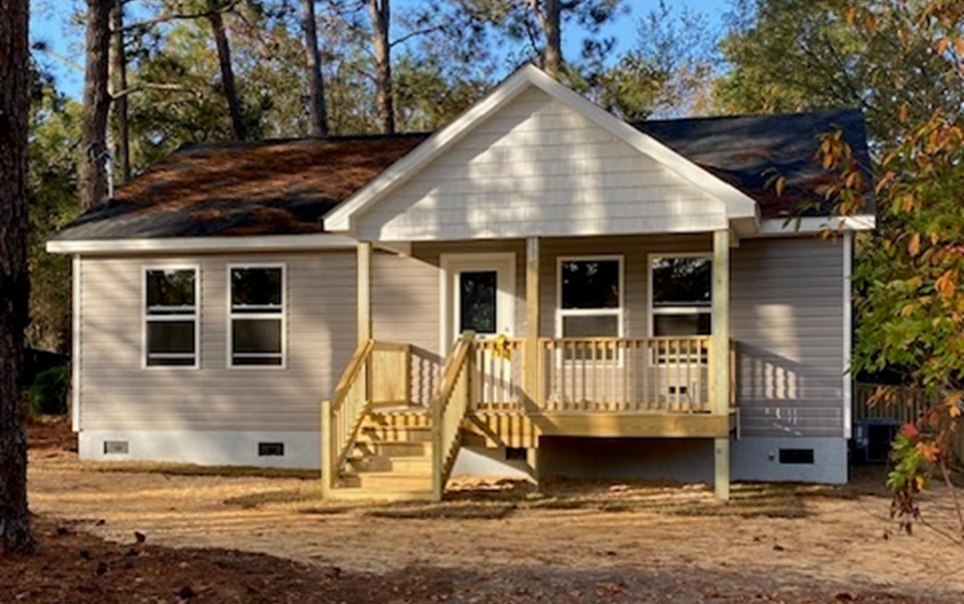
Columbia, SC – On Friday, September 11, 2026, The South Carolina Office of Resilience (SCOR) reached a historic milestone by formally closing its third federal grant for Disaster Recovery: Hurricane Florence. The program focused on housing recovery and reached construction complete status in October 2024 after repairing and replacing 488 homes for households impacted in 2018 by Hurricane Florence.
This formal closeout marks the third consecutive federal disaster recovery grant the State of South Carolina has completed on budget and within the spending deadline set by the federal government that historically few grantees have consistently met.
This disaster recovery program was funded with a $72 million US Department of Housing and Urban Development (HUD) Community Development Block Grant - Disaster Recovery (CDBG-DR), as well as $7.3 million in additional leverage funds from the South Carolina State Housing Finance and Development Authority.
This program was preceded by two state-run HUD CDBG-DR programs administered by the South Carolina Disaster Recovery Office prior to its incorporation into the South Carolina Office of Resilience via the 2020 South Carolina Disaster Relief and Resilience Act. These were the $126 million 2015 Severe Storm program and the $95 million 2016 Hurricane Matthew program.
Of the completed homes in the Hurricane Florence program, 394 (80%) were in Dillion, Horry and Marion counties, which were identified as the Most Impacted and Distressed (MID) counties by HUD. Chesterfield, Darlington Florence, Georgetown, and Marlboro Counties were also served.
HUD also mandates at least 70% of funds benefit low- and moderate-income households. SCOR, pursuant to its goal of prioritizing service for the most vulnerable individuals, ensured over 99% of the homeowners served earned 80% or less of their area median income.
“Following three federally declared disasters between 2015 and 2018, impacting much of the same regions of the state, SCOR has strived to identify those South Carolinians who are facing the most significant challenges to their recovery,” explains Chief Resilience Officer Ben Duncan. “We’re taking the lessons we’ve learned from the success of our first three disaster recovery programs and are applying those to our Hurricane Helene Disaster Recovery mission.”
Construction completion in the Hurricane Florence program brings the total homes repaired or replaced by SCOR in the three programs to 3,459.
- 2015 Severe Storm: 1,829 homes
- 2016 Hurricane Matthew: 1,142 homes
- 2018 Hurricane Florence: 488 homes
With Hurricane Helene Disaster Recovery ongoing through both federal and state-funded housing recovery programs, and a FEMA-funded Disaster Case Management program, the total number of homes has now exceeds 3,480 and the milestone of 3,500 completed homes will be reached in the coming months. Citizens that still have disaster-caused unmet needs may contact the Disaster Case Management program at (803) 898-2511.
The South Carolina Office of Resilience (SCOR) is committed to enhancing the state's resilience to environmental changes and natural hazards by planning and coordinating statewide resilience, long-term disaster recovery, and hazard mitigation, recognizing that South Carolina ranks fifth among states for the most hurricane impacts over the entire historical record of Atlantic hurricanes (South Carolina State Climatology Office).
About SCOR:
The South Carolina Office of Resilience (SCOR) is committed to enhancing the state's ability to anticipate, absorb, recover, and thrive when presented with environmental changes and natural hazards by planning and coordinating statewide resilience, long-term disaster recovery, and hazard mitigation. In addition to serving over 3,480 homes in our Disaster Recovery Program, SCOR has 86 active flood mitigation projects, including voluntary buyouts, stormwater infrastructure, and plans and studies, across the State. SCOR continues to implement and maintain the Strategic Statewide Resilience and Risk Reduction Plan, which provides a framework to guide investment in projects, programs, and policies to protect the people and property of South Carolina from the damage and destruction of extreme weather events.
Legal Disclaimer:
EIN Presswire provides this news content "as is" without warranty of any kind. We do not accept any responsibility or liability for the accuracy, content, images, videos, licenses, completeness, legality, or reliability of the information contained in this article. If you have any complaints or copyright issues related to this article, kindly contact the author above.
